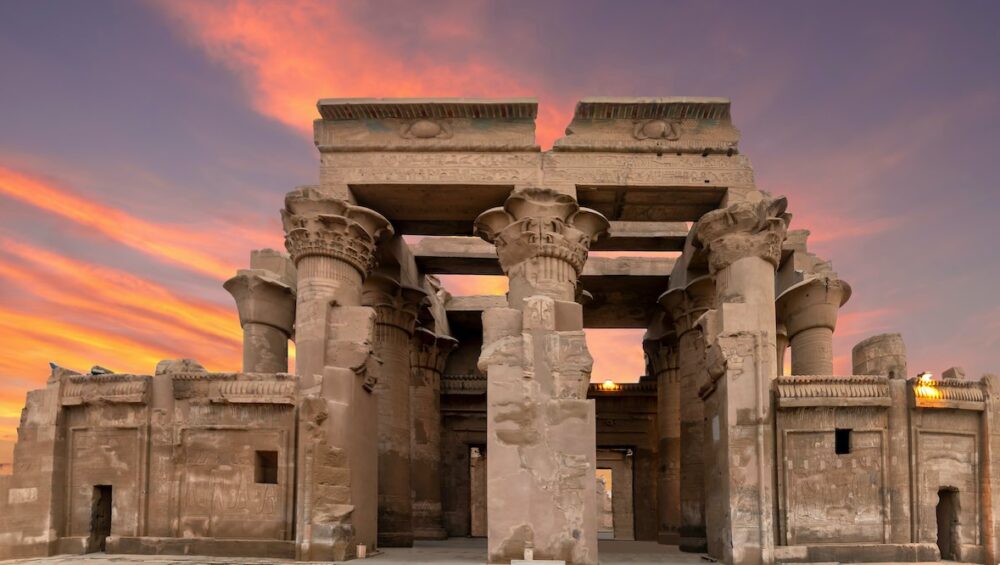
كوم أمبو is an ancient temple located in Aswan, Egypt, which is dedicated to two Egyptian gods, Sobek and Horus. It is situated on the eastern bank of the Nile River and is approximately 50 km north of Aswan. The temple was built during the Ptolemaic period, between 180-47 BC, with later additions made during the Roman era. The temple is divided into two parts, with each part dedicated to a different god.
The southern part of the temple is dedicated to Sobek, the crocodile god, while the northern part is dedicated to Horus, the falcon god. The temple is considered one of the most well-preserved temples in Egypt and is a popular tourist attraction.
Sobek The crocodile god
Sobek, the crocodile god, was an important deity in ancient Egyptian religion as crocodiles were considered sacred animals. The temple of Kom Ombo is home to dozens of mummified crocodiles that were discovered in the vicinity of the temple. The southern part of the temple dedicated to Sobek features many images and carvings of the god, and visitors can see the remains of these sacred animals.
The falcon god Horus
Horus, the falcon god, was one of the most important gods in ancient Egyptian religion. He was the god of the sky and was often depicted with the head of a falcon. The northern part of the temple dedicated to Horus features several images of the god, including a large statue of him in the hypostyle hall. The hypostyle hall is a significant feature of the temple, and it is divided into two parts, with each part having its own set of columns. The columns on the left side of the hall are decorated with images of the god Sobek, while the columns on the right side of the hall are decorated with images of the god Horus.
Nilometer
One of the most interesting features of the temple of Kom Ombo is the Nilometer, which was used to measure the height of the Nile River during the annual flooding season. The height of the Nile River was crucial to the ancient Egyptians, as it determined the success of the crops that were grown along the river. The Nilometer at Kom Ombo is one of the most well-preserved Nilometers in Egypt, and visitors can see how it worked and how important it was to the ancient Egyptians.
Reliefs
The temple of Kom Ombo is also well-known for its reliefs, which depict scenes from ancient Egyptian mythology. The reliefs are located throughout the temple and are a fascinating glimpse into the beliefs and customs of the ancient Egyptians. The reliefs depict scenes of the gods, as well as scenes of daily life, such as fishing and farming. Visitors can observe the intricate carvings and details of the reliefs and gain insight into the culture and traditions of ancient Egypt.
Crocodile Museum
In addition to the temple, visitors to Kom Ombo can also enjoy a visit to the nearby crocodile museum. The museum houses dozens of mummified crocodiles, as well as other artifacts from ancient Egyptian times. The museum provides a fascinating glimpse into the history and culture of the ancient Egyptians and is a great way to learn more about the significance of the crocodile god Sobek.
الختام
The temple of Kom Ombo is a must-visit destination for anyone interested in ancient Egyptian history and culture. The temple provides an opportunity to see the skill of the ancient Egyptian builders and artisans and the importance of the Nile River in ancient Egyptian society. The temple is a unique destination, dedicated to two important gods in ancient Egyptian religion, and a testament to the beliefs and customs of the ancient Egyptians.
Visitors to Kom Ombo can also enjoy a visit to the nearby crocodile museum, which offers a fascinating glimpse into the history and culture of ancient Egypt. A visit to Kom Ombo is an unforgettable experience and an opportunity to learn about the rich history and culture of Egypt.