Queens of Egypt
Introduction
The history of Egypt is rich with tales of powerful rulers, monumental structures, and profound cultural achievements. Among the iconic figures who have left an indelible mark on this ancient civilization are the Queens of Egypt. These regal women not only played pivotal roles in the governance and religious life of ancient Egypt but also significantly influenced its cultural and political landscapes. This article explores the lives and legacies of some of the most renowned Queens of Egypt, shedding light on their contributions and enduring influence.
Hatshepsut: The Female Pharaoh
Early Life and Ascension
Hatshepsut stands out as one of the most remarkable Queens of Egypt due to her unprecedented rise to power. Born to King Thutmose I and Queen Ahmose, Hatshepsut was of royal blood and well-versed in the intricacies of Egyptian court life. After the death of her husband, Thutmose II, Hatshepsut initially served as regent for her stepson, Thutmose III. However, she eventually assumed the title of Pharaoh, a role traditionally reserved for men.
Reign and Achievements
During her reign, Hatshepsut focused on economic prosperity and monumental architecture. Her most famous architectural achievement is the Mortuary Temple at Deir el-Bahri, a stunning example of ancient Egyptian engineering and art. Hatshepsut’s reign was marked by stability and prosperity, with significant advancements in trade, including a notable expedition to the land of Punt, which brought back valuable goods and exotic items.
Nefertiti: The Icon of Beauty and Power
Royal Consort and Co-Regent
Nefertiti, often remembered for her legendary beauty, was more than just a queen; she was a powerful co-regent alongside her husband, Pharaoh Akhenaten. Together, they initiated a religious revolution that shifted the worship of the Egyptian pantheon to a single god, Aten, the sun disk.
Influence and Legacy
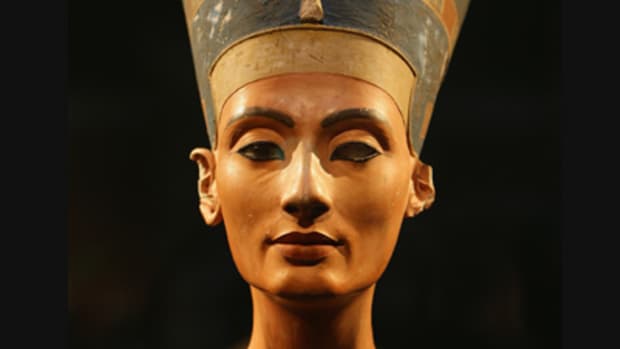
Nefertiti’s influence extended beyond religion. She played a critical role in diplomatic affairs and was actively involved in the administration of the kingdom. Her iconic bust, discovered in 1912, remains a symbol of ancient Egyptian art and has cemented her status as one of the most famous Queens of Egypt. Despite the eventual decline of the Aten cult, Nefertiti’s impact on Egyptian history and culture remains profound.
Cleopatra VII: The Last Pharaoh of Egypt
Political Savvy and Romance
Cleopatra VII is perhaps the most well-known Queen of Egypt, celebrated for her intelligence, political acumen, and romantic liaisons with powerful Roman figures such as Julius Caesar and Mark Antony. Cleopatra’s reign was marked by her efforts to maintain Egypt’s independence amidst the growing power of Rome.
Reign and Downfall
Cleopatra’s rule saw significant cultural and economic developments. She was fluent in multiple languages and embraced Egyptian customs and religion, unlike her Ptolemaic predecessors who largely adhered to Greek traditions. Cleopatra’s romantic and political alliances were aimed at strengthening her position and securing Egypt’s sovereignty. However, her defeat alongside Mark Antony by Octavian (later Augustus) led to the end of the Ptolemaic dynasty and Egypt’s annexation into the Roman Empire.
Nefertari: The Beloved Queen
Marriage to Ramses II
Nefertari, the Great Royal Wife of Pharaoh Ramses II, is renowned for her beauty, intelligence, and diplomatic skills. Ramses II dedicated numerous monuments to her, including the famous temple at Abu Simbel, highlighting her esteemed position and the deep affection he held for her.
Contributions and Legacy
Nefertari was highly educated, proficient in reading and writing hieroglyphs, which was uncommon for women of her time. Her diplomatic efforts were instrumental in maintaining peace and fostering alliances with neighboring regions. The richly decorated tomb of Nefertari in the Valley of the Queens, with its vibrant and well-preserved frescoes, stands as a testament to her enduring legacy and the high regard in which she was held.
Tiye: The Queen Mother
Marriage and Influence
Queen Tiye, wife of Amenhotep III and mother of Akhenaten, wielded significant influence during one of Egypt’s most prosperous periods. Her marriage to Amenhotep III was not only a union of two powerful families but also a political alliance that strengthened the kingdom.
Legacy
Tiye was deeply involved in state affairs and religious reforms. Her intelligence and political acumen earned her a prominent position in the royal court. Her son, Akhenaten, continued to revere her even after ascending the throne, highlighting her lasting impact on Egyptian politics and religion.
Conclusion
The Queens of Egypt were more than just consorts to powerful pharaohs; they were influential leaders, diplomats, and cultural icons. Their contributions to the political, economic, and cultural spheres of ancient Egypt have left an enduring legacy that continues to fascinate historians and the general public alike. From Hatshepsut’s pioneering reign to Cleopatra’s dramatic life and death, these queens exemplify the strength, intelligence, and resilience that defined ancient Egyptian civilization. As we continue to unearth and study the remnants of their reigns, the Queens of Egypt remain timeless figures of empowerment and legacy.