Kom ombo Temple

Kom Ombo: The Fascinating Dual Deity Temple of Aswan

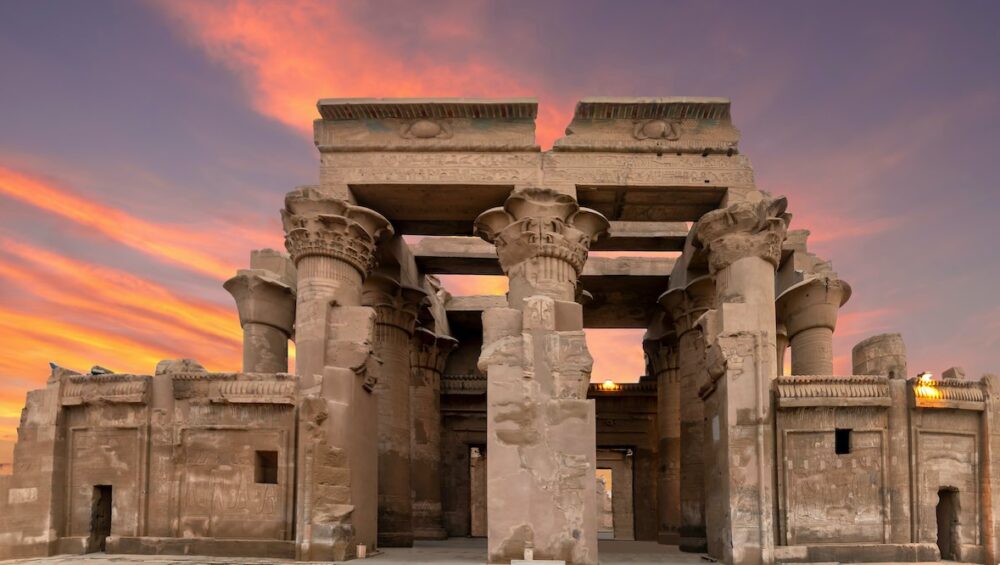
كوم أمبو is an ancient temple located in Aswan, Egypt, which is dedicated to two Egyptian gods, Sobek and Horus. It is situated on the eastern bank of the Nile River and is approximately 50 km north of Aswan. The temple was built during the Ptolemaic period, between 180-47 BC, with later additions made during the Roman era. The temple is divided into two parts, with each part dedicated to a different god.

The southern part of the temple is dedicated to Sobek, the crocodile god, while the northern part is dedicated to Horus, the falcon god. The temple is considered one of the most well-preserved temples in Egypt and is a popular tourist attraction.


Sobek The crocodile god

Sobek, the crocodile god, was an important deity in ancient Egyptian religion as crocodiles were considered sacred animals. The temple of Kom Ombo is home to dozens of mummified crocodiles that were discovered in the vicinity of the temple. The southern part of the temple dedicated to Sobek features many images and carvings of the god, and visitors can see the remains of these sacred animals.


The falcon god Horus

Horus, the falcon god, was one of the most important gods in ancient Egyptian religion. He was the god of the sky and was often depicted with the head of a falcon. The northern part of the temple dedicated to Horus features several images of the god, including a large statue of him in the hypostyle hall. The hypostyle hall is a significant feature of the temple, and it is divided into two parts, with each part having its own set of columns. The columns on the left side of the hall are decorated with images of the god Sobek, while the columns on the right side of the hall are decorated with images of the god Horus.


Nilometer

One of the most interesting features of the temple of Kom Ombo is the Nilometer, which was used to measure the height of the Nile River during the annual flooding season. The height of the Nile River was crucial to the ancient Egyptians, as it determined the success of the crops that were grown along the river. The Nilometer at Kom Ombo is one of the most well-preserved Nilometers in Egypt, and visitors can see how it worked and how important it was to the ancient Egyptians.


Reliefs

The temple of Kom Ombo is also well-known for its reliefs, which depict scenes from ancient Egyptian mythology. The reliefs are located throughout the temple and are a fascinating glimpse into the beliefs and customs of the ancient Egyptians. The reliefs depict scenes of the gods, as well as scenes of daily life, such as fishing and farming. Visitors can observe the intricate carvings and details of the reliefs and gain insight into the culture and traditions of ancient Egypt.


Crocodile Museum

In addition to the temple, visitors to Kom Ombo can also enjoy a visit to the nearby crocodile museum. The museum houses dozens of mummified crocodiles, as well as other artifacts from ancient Egyptian times. The museum provides a fascinating glimpse into the history and culture of the ancient Egyptians and is a great way to learn more about the significance of the crocodile god Sobek.


الختام

The temple of Kom Ombo is a must-visit destination for anyone interested in ancient Egyptian history and culture. The temple provides an opportunity to see the skill of the ancient Egyptian builders and artisans and the importance of the Nile River in ancient Egyptian society. The temple is a unique destination, dedicated to two important gods in ancient Egyptian religion, and a testament to the beliefs and customs of the ancient Egyptians.

Visitors to Kom Ombo can also enjoy a visit to the nearby crocodile museum, which offers a fascinating glimpse into the history and culture of ancient Egypt. A visit to Kom Ombo is an unforgettable experience and an opportunity to learn about the rich history and culture of Egypt.
معبد إدفو

Edfu, Where Egypt’s Falcon God Soars Immortal

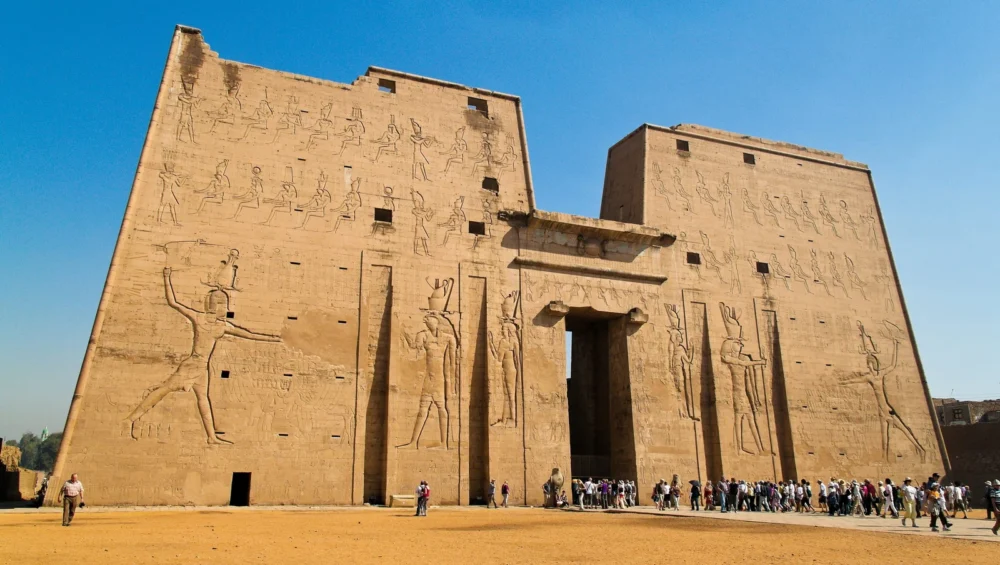
Edfu is a small town located in Aswan, Egypt, on the west bank of the Nile River. This town is home to one of the most well-preserved ancient Egyptian temples, the Temple of Horus. Built during the reign of Ptolemy III in the 3rd century BC, the Temple of Horus is an exemplary representation of Ptolemaic architecture in Egypt. It was constructed on the site of an earlier temple dedicated to Horus, the falcon-headed god of the sky. This temple was intended to be a place of worship for Horus, who was believed to be the protector of the pharaohs and the people of Egypt.

The Temple of Horus

The Temple of Horus is designed in the traditional Egyptian style, featuring a series of courtyards and halls leading to the inner sanctuary. The walls of the temple are adorned with intricate carvings and hieroglyphics that depict the story of Horus and his battles with Set, his uncle and the god of chaos and disorder.

One of the most remarkable features of the Temple of Horus is the massive pylon that serves as the gateway to the first courtyard. This pylon is decorated with carvings of Horus and other gods, as well as scenes from the life of the pharaohs. It is a grand and impressive sight that gives visitors a sense of the opulence and power of the ancient Egyptian civilization.

The first courtyard is a large open space that was used for public ceremonies and processions. It is surrounded by columns decorated with carvings of lotus flowers, which were a symbol of rebirth and regeneration in ancient Egypt. At the far end of the courtyard is the entrance to the hypostyle hall, which is one of the most impressive parts of the temple.

The hypostyle hall

The hypostyle hall is a vast space that is supported by 12 massive columns, each adorned with carvings of the god Osiris. The walls of the hall are covered in hieroglyphics and carvings that depict the story of Horus and his battles with Set. This hall was used for religious ceremonies and was believed to be the place where the pharaohs were crowned.

The inner sanctuary of the temple is the holiest part of the complex. It is a small room that is only accessible to priests and high-ranking officials. Inside the sanctuary is a statue of Horus, believed to be the living embodiment of the god. The statue was bathed and dressed each day, and offerings were made to it as a sign of devotion and respect.

Restoration of the temple

One of the most fascinating aspects of the Temple of Horus is that it was continuously used throughout the centuries. Even after the decline of the ancient Egyptian civilization, the temple continued to be used by Christians and Muslims. During the Christian period, the temple was converted into a church, and much of the carvings and decorations were covered with plaster to conceal their pagan origins. In the 19th century, the temple was restored to its former grandeur by French archaeologists who removed the plaster and exposed the original carvings and hieroglyphics.

Today, the Temple of Horus is one of the most popular tourist destinations in Egypt. Visitors can explore the various courtyards and halls of the temple, marvel at the intricate carvings and hieroglyphics, and learn about the history and mythology of ancient Egypt. The temple is also used for special events and ceremonies, such as the annual Festival of Horus, which takes place in August and attracts visitors from all over the world.

Edfu Town

In addition to the Temple of Horus, إدفو offers other interesting sites and attractions. The town itself is a charming place with narrow streets and traditional houses, giving visitors a glimpse into the daily life of modern Egypt. The nearby Nile River is a popular destination for boat tours and cruises, and visitors can also explore the nearby desert and visit the ancient quarries where the stone for the pyramids was extracted.

الختام

In conclusion, Edfu is a fascinating destination for anyone interested in ancient history and culture. The Temple of Horus is a masterpiece of ancient architecture and design and provides a window into the beliefs and mythology of one of the world’s most enduring civilizations. Whether you are a history buff, an art lover, or simply looking for a unique travel experience, Edfu is a destination that should be on your list of places to visit.

Alexandria Day Tour

Alexandria: A Fusion of History, Culture, and Innovation

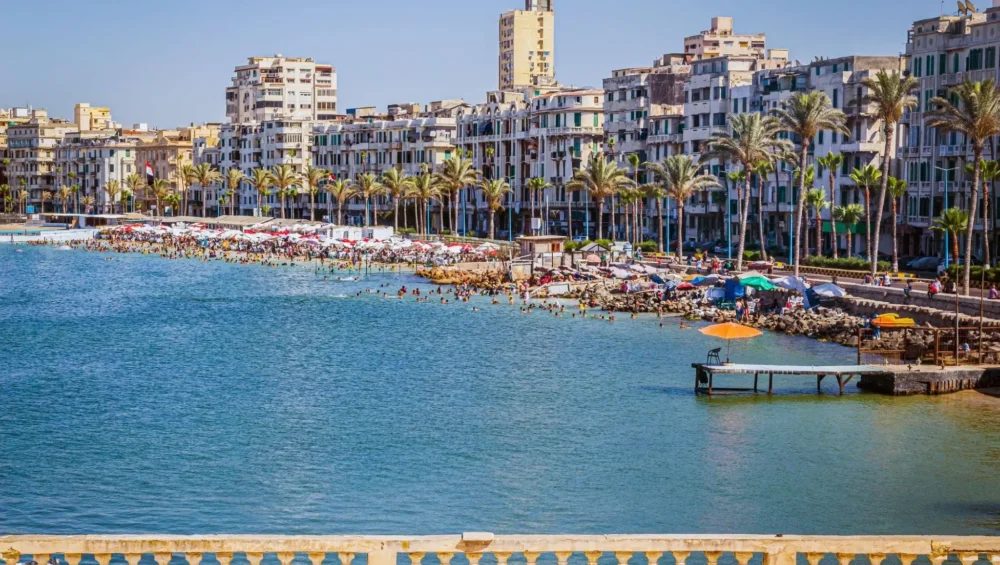
Alexandria is a city located in the north of Egypt, founded by Alexander the Great in 331 BCE, and was once the capital of the Ptolemaic Kingdom. Throughout history, Alexandria has been a hub for learning, trade, and cultural exchange, and its significance has only grown over time. Today, the city is a bustling metropolis with a plethora of landmarks and attractions that draw visitors from all over the world.

Today, Alexandria is a bustling metropolis that has grown and evolved over time, yet still retains its unique character. The city’s rich history is evident in its many landmarks and attractions, including the ancient ruins of Kom el Shoqafa and the Pompey Pillar, which stand as a testament to the city’s Greco-Roman past. The Qaitbay Citadel, built in the 15th century, is a stunning example of Islamic architecture and serves as a reminder of the city’s long and diverse history.

Kom el Shoqafa Catacombs

One of the most prominent sites in Alexandria is the Kom el Shoqafa, which is a necropolis dating back to the 2nd century CE. The site is an amalgamation of Roman and Egyptian architectural styles and is considered one of the Seven Wonders of the Middle Ages. Visitors can explore the underground tombs and marvel at the intricate carvings and stunning architecture.

Pompey Pillar

Another iconic landmark is the Pompey Pillar, a towering column standing over 25 meters tall. Built in honor of the Roman Emperor Diocletian, it is believed to have been part of a temple complex devoted to the god Serapis. Visitors can climb the stairs to the top of the pillar and enjoy breathtaking views of the city.

قلعة قايتباي

ال قلعة قايتباي is also a popular attraction in Alexandria, built in the 15th century by Sultan Al-Ashraf Qaitbay to defend the city from invaders. The citadel is a magnificent example of Islamic architecture, featuring colossal walls, towers, and a drawbridge. Visitors can explore the interior of the citadel, which includes a mosque, a lighthouse, and a museum.

مكتبة الإسكندرية

One of the most remarkable modern landmarks is the مكتبة الإسكندرية, also known as the Alexandria Library. This contemporary facility was built in 2002 and pays homage to the ancient Library of Alexandria, one of the most extensive and significant libraries in the ancient world. The Alexandria Library is a stunning example of modern architecture, housing millions of books, manuscripts, and other materials. Visitors can attend lectures and workshops, explore the library’s exhibitions, and experience the many cultural events that take place throughout the year.

Other Sites

Aside from these famous sites, Alexandria has much to offer visitors. The city is home to numerous museums, art galleries, and cultural centers that showcase the region’s rich history and diverse culture. The city also boasts a vibrant culinary scene, with a wide array of restaurants, cafes, and street food vendors serving up delectable local specialties.

الختام

In conclusion, Alexandria is a city that offers a unique blend of ancient wonders and modern marvels, making it a must-visit destination for anyone interested in Egyptian history and culture. A city steeped in history and culture that offers visitors a plethora of landmarks and attractions to explore. From the ancient ruins of Kom el Shoqafa and the Pompey Pillar to the modern marvels of the Alexandria Library and the قلعة قايتباي, there is something for everyone in this vibrant and dynamic city. Visitors can experience the rich heritage and cultural diversity of Alexandria, making it a must-visit destination for anyone touring Egypt.


رحلة إلى أهرامات الجيزة وأبو الهول

Giza Pyramids and Sphinx: Ancient Wonders of Egypt

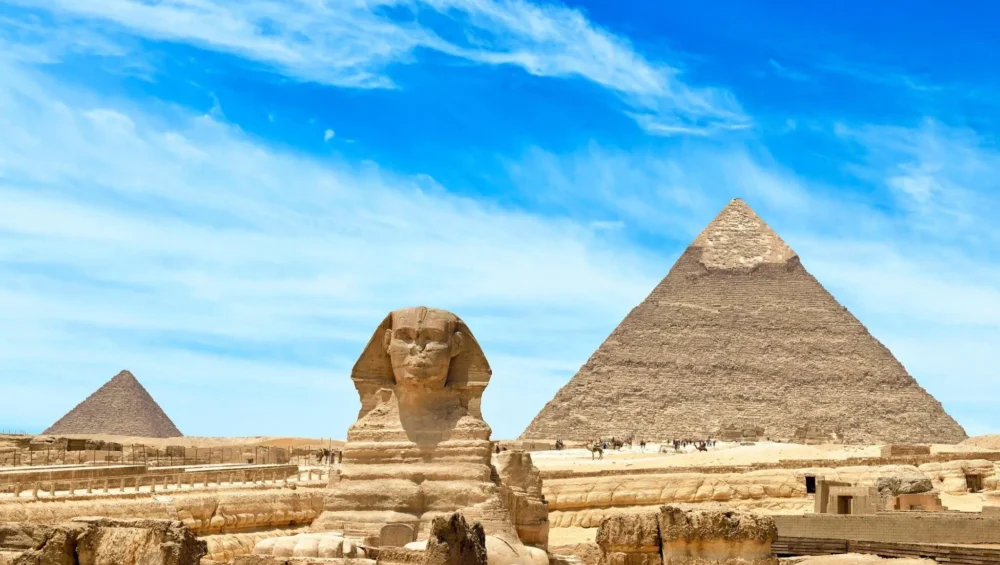
The Giza Pyramids and the Sphinx are two of the most remarkable and renowned structures in the world. Situated on the outskirts of modern-day Cairo, Egypt, they are monuments to the skill and creativity of the ancient Egyptians who built them.

ال Giza Pyramids are a complex of three pyramids, known as the Great Pyramids, which were constructed during the Fourth Dynasty of the Old Kingdom of Egypt. The pyramids were built as tombs for the pharaohs Khufu, Khafre, and Menkaure, and it is believed that they took over 20 years to build. The largest of the pyramids, the Great Pyramid of Khufu, is regarded as one of the Seven Wonders of the Ancient World and was constructed around 2560 BCE.

The Great Pyramid of Khufu

ال Great Pyramid of Khufu is a massive structure standing at a height of 147 meters (481 feet), made up of an estimated 2.3 million stone blocks, each weighing between 2 and 80 tons. The size and complexity of the pyramid have led to speculation about how the ancient Egyptians constructed it. Some theories suggest that they used ramps and pulleys to move the massive stone blocks, while others believe that they may have used water to transport the blocks along specially constructed canals.

Although the other two pyramids, the Pyramid of Khafre and the Pyramid of Menkaure, are slightly smaller than the Great Pyramid of Khufu, they are still impressive feats of engineering. The Pyramid of Khafre stands at a height of 136 meters (446 feet) and was built around 2520 BCE, while the Pyramid of Menkaure stands at a height of 66 meters (215 feet) and was constructed around 2490 BCE.

One of the most intriguing features of the Giza Pyramids is the way in which they were constructed. Each pyramid was built in a series of layers, with the blocks of stone being laid in a precise pattern. The blocks were carefully cut and shaped to fit together perfectly, and the entire structure was then covered in a smooth layer of fine white limestone. This outer layer has mostly eroded over time, leaving only a few remnants, but it is believed that the pyramids would have gleamed brilliantly in the sun when they were first constructed.

ابو الهول

The Sphinx, located a short distance from the Giza Pyramids, is another iconic structure. The Sphinx is a massive statue that stands 20 meters (66 feet) tall and 73 meters (240 feet) long. It is believed to have been built during the reign of the pharaoh Khafre, who also constructed the second largest pyramid at Giza.

The Sphinx has the body of a lion and the head of a human, and it is thought to represent the pharaoh himself. The statue is carved out of a single block of limestone and is one of the largest monolithic statues in the world. It is also one of the oldest, with some estimates suggesting that it may have been built as early as 2500 BCE.

The Sphinx has been weathered over time, and the original paint on the statue has mostly worn away. The head of the Sphinx has also been heavily damaged, possibly due to erosion caused by wind and sand over thousands of years. Nonetheless, the Sphinx remains a striking and impressive sight.

Researches about the Pyramids

The Giza Pyramids and the Sphinx have captured the imaginations of people around the world for centuries. They are a testament to the skill and ingenuity of the ancient Egyptians and continue to inspire awe and wonder in those who visit them today.

In recent years, research has provided new insights into the construction of the pyramids and the Sphinx. For example, scientists believe that the blocks of stone used to build the pyramids may have been transported from quarries located as far away as Aswan, over 800 kilometers (500 miles) to the south.

Research has also focused on the precise construction techniques used to build the pyramids. Some scientists believe that the ancient Egyptians used a system of counterweights to lift the massive stone blocks into place, which would have required an incredible amount of planning, organization, and understanding of mathematics and physics.

الختام

Despite the many unanswered questions surrounding the Giza Pyramids and the Sphinx, they remain among the most impressive and awe-inspiring structures in the world. They stand as a testament to the power and sophistication of the ancient Egyptian civilization and continue to captivate and inspire people from all walks of life. Visiting these iconic structures provides an opportunity to experience the marvels of human engineering and the enduring legacy of one of the world’s greatest ancient civilizations.

Mount Sinai and St. Catherine Overnight Tour

Sinai and St. Catherine: Holy Destination for All Faiths

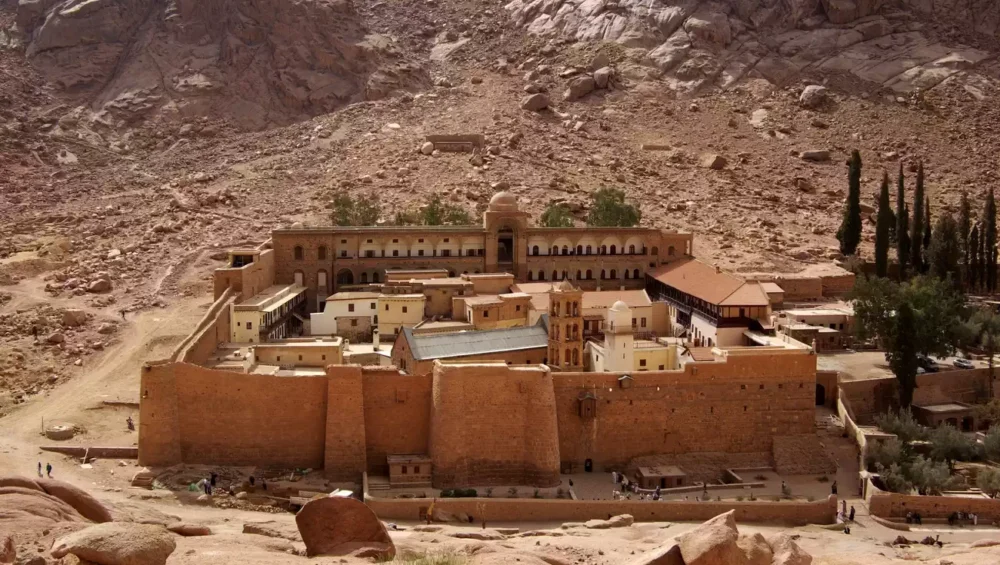
Mount Sinai is a mountain located in the Sinai Peninsula of Egypt that has been considered a holy site for thousands of years. It is believed to be the location where Moses received the Ten Commandments from God and has since become an important pilgrimage site for Christians, Jews, and Muslims. St. Catherine Monastery is situated at the foot of the mountain and is one of the oldest functioning Christian monasteries in the world.

Mount Sinai Significance

The mountain has a long and significant history. It is named after the moon god of the ancient Egyptians, Sin, but it is more famously known as the place of Moses’ encounter with God. The story of Moses receiving the Ten Commandments from God is a pivotal event in the history of Judaism, Christianity, and Islam. According to the biblical account, Moses climbed to the top of the mountain and stayed there for forty days and forty nights, during which he received the tablets containing the Ten Commandments. The mountain is also believed to be the place where Elijah the prophet had a vision of God.

The Burning Bush

Christians have long considered جبل سيناء a pilgrimage site. St. Helena, the mother of Emperor Constantine, visited the region in the 4th century AD and built a chapel at the foot of the mountain. This chapel, known as the Chapel of the Burning Bush, is still standing today and is believed to be the site where Moses first encountered God in the form of a burning bush. Over the centuries, Mount Sinai has witnessed numerous conflicts and battles, including those during the Crusades and Bedouin rebellion. Despite its turbulent history, Mount Sinai has remained a place of pilgrimage and spiritual significance for people of many faiths.

St. Catherine Monastery

St. Catherine Monastery was founded in the 6th century AD by the Byzantine Emperor Justinian I, on the site where St. Catherine of Alexandria was believed to have been buried. The monastery was built to protect the site and monks from Bedouin attacks. Over the centuries, the monastery became an important center for learning and scholarship. The monks at St. Catherine also played a key role in the development of the Eastern Orthodox Church. The monastery has withstood many attacks and disasters over the centuries, including ones from Muslim armies, earthquakes, and Crusader forces. In the 11th century, the monastery was damaged by an earthquake, but was rebuilt by the Byzantine Emperor Michael IV. In the 13th century.

The Spiritual Significance of Mount Sinai and St. Catherine Monastery

Mount Sinai and St. Catherine Monastery hold spiritual significance for Christians, Jews, and Muslims. The mountain represents God’s presence and the place where the Law was given to Moses for Christians, a sacred place in Judaism. The monastery is also revered as a holy site for its connection to St. Catherine of Alexandria, a Christian martyr.

Visiting Mount Sinai and St. Catherine Monastery can be challenging due to its remote location. The most common way to reach it is by taking a bus or taxi from Dahab or Sharm El Sheikh. Visitors should also be prepared for the extreme heat and harsh conditions of the desert. The climb to the top of the mountain is physically demanding, but watching the sunrise over the desert is considered a life-changing experience.

الختام

In conclusion, Mount Sinai and St. Catherine Monastery have a rich history and spiritual significance for people of many faiths. They are important pilgrimage sites and can provide a powerful spiritual experience for visitors. The mountain and monastery have played a significant role in the history of the region, and their continued existence is a testament to the enduring power of faith and the human spirit.