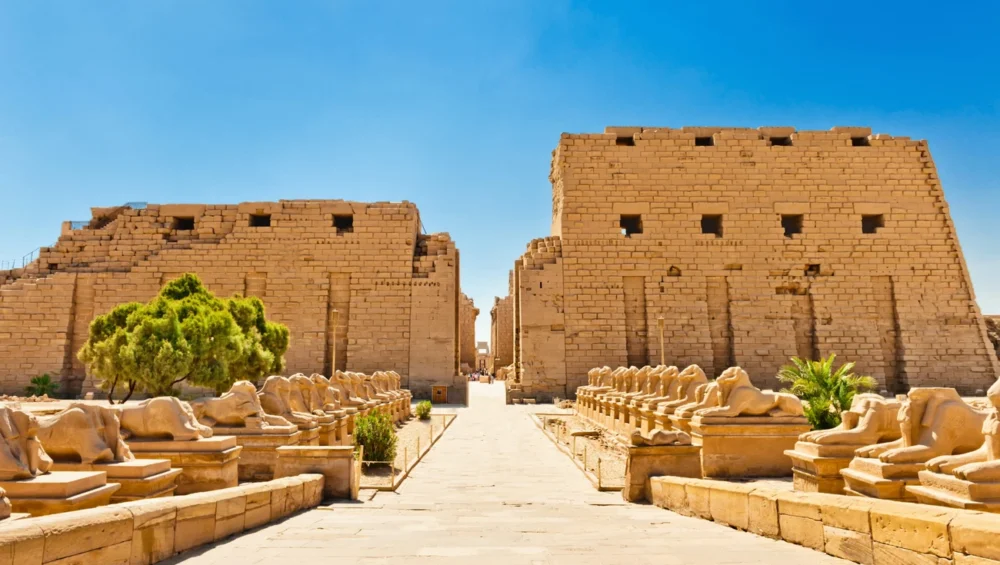
La Karnak and Luxor Temples are two of the most iconic and awe-inspiring ancient sites in Egypt. Located in Luxor, these temples have stood the test of time and remain a testament to the genius and vision of the ancient Egyptians. Both temples were constructed over thousands of years, and are dedicated to different gods and goddesses.
Exploring the Karnak Temple
La Tempio di Karnak is the largest religious complex in the world, covering an area of over 200 acres. The temple was dedicated to the god Amun, and it was believed that the pharaohs could communicate with the gods through the priests who served at the temple. The temple complex was constructed over more than a thousand years, with work beginning in the Middle Kingdom around 2000 BC.
The Great Hypostyle Hall at the Karnak Temple is one of the most impressive architectural wonders of the ancient world. The hall contains 134 massive columns, some of which are over 70 feet tall, and is decorated with intricate carvings and hieroglyphics that depict scenes from ancient Egyptian mythology. The hall was constructed during the reign of Seti I and was completed by his son, Ramses II.
La Tempio di Karnak also contains a sacred lake, which was used for ritual purification, as well as smaller shrines and chapels dedicated to various gods and goddesses. The temple complex also contains the Temple of Khonsu, the Temple of Ptah, and the Temple of Mut. These temples were added over the centuries, and each has its own unique features and architectural style.
In addition to its impressive size and architectural features, the Karnak Temple is also home to one of the largest collections of ancient Egyptian art and artifacts in the world. Visitors can see everything from statues and reliefs to jewelry and pottery, all of which offer a glimpse into the rich culture and history of ancient Egypt.
Uncovering the Secrets of the Luxor Temple
La Tempio di Luxor is located just a short distance from the Karnak Temple and was constructed over a period of more than a thousand years, beginning in the 14th century BC. The temple was dedicated to the gods Amun, Mut, and Khonsu, and it was used for religious ceremonies throughout the New Kingdom period. The temple was also the site of the annual Opet Festival, which celebrated the god Amun’s journey from Karnak to Luxor.
One of the most impressive features of the Luxor Temple is the pylon entrance, which was constructed during the reign of Ramses II. The entrance is flanked by two massive statues of Ramses II, which are over 60 feet tall. Visitors can also explore the colonnaded courtyard, which contains numerous columns with intricate carvings and hieroglyphics.
Inside the temple, visitors can see various sanctuaries and chapels dedicated to different gods and goddesses, including the Chapel of Alexander the Great, which was added by the Greeks during their occupation of Egypt. The temple also contains a barque shrine, which was used to transport the statues of the gods during the Opet Festival.
The Luxor Temple is also home to the Avenue of Sphinxes, a long path that was once lined with hundreds of sphinx statues. The avenue originally connected the Luxor Temple to the Karnak Temple, and visitors can still see some of the remaining sphinxes today.
A Journey Through Time
Visiting the Karnak and Luxor Temples is like taking a journey through time, back to a world that was vastly different from our own. These temples offer a glimpse into the rich culture and history of ancient Egypt, and they remind us of the incredible achievements of the ancient Egyptians.
Walking through these temples, visitors can imagine what life was like for the pharaohs and priests who served here. They can see the intricate carvings and hieroglyphics that tell the stories of ancient Egyptian mythology, and they can marvel at the size and complexity of these ancient structures.
But the Karnak and Luxor Temples are more than just relics of the past. They are living testaments to the ingenuity and creativity of the human spirit, and they remind us of the power of faith and the enduring legacy of ancient civilizations.
In conclusion, the Karnak and Luxor Temples are two of the most impressive ancient sites in the world, offering visitors a glimpse into the rich history and culture of ancient Egypt. These temples are a testament to the ingenuity and skill of the ancient Egyptians, who were able to construct such impressive structures over thousands of years. A visit to these temples is a journey through time, an opportunity to immerse oneself in the mysteries of ancient Egypt and to marvel at the incredible achievements of the human spirit.