Egyptian Mythology Facts
Egyptian mythology is a treasure trove of ancient stories, gods, and beliefs that have fascinated historians, archaeologists, and mythology enthusiasts for centuries. Rooted in the ancient civilization of Egypt, these myths offer a glimpse into the spiritual life and cultural values of one of history’s most intriguing societies. Here, we delve into some of the most fascinating Egyptian mythology facts, shedding light on the deities, creation myths, and symbolic tales that shaped the ancient Egyptian worldview.
The Pantheon of Egyptian Gods and Goddesses
The All-Powerful Sun God: Ra
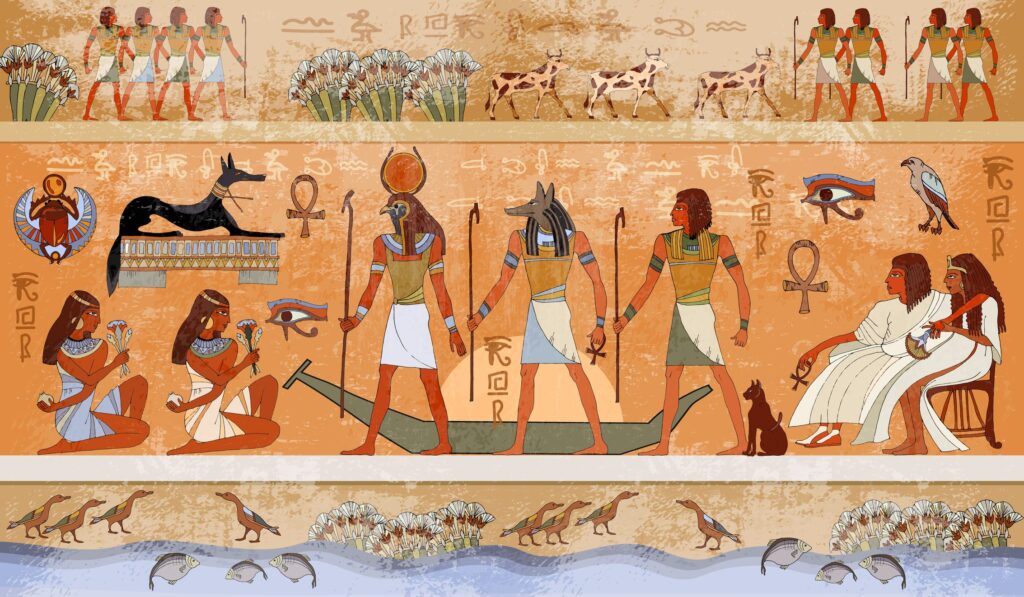
One of the central figures in Egyptian mythology is Ra, the sun god. Ra was considered the king of the gods and the creator of all life. Depicted with the head of a falcon and a sun disk encircled by a cobra, Ra’s daily journey across the sky symbolized the cycle of life and death. According to myth, Ra traveled through the underworld at night, battling the chaos serpent Apep to ensure the sun’s rebirth each morning.
The Mysterious Osiris and the Afterlife
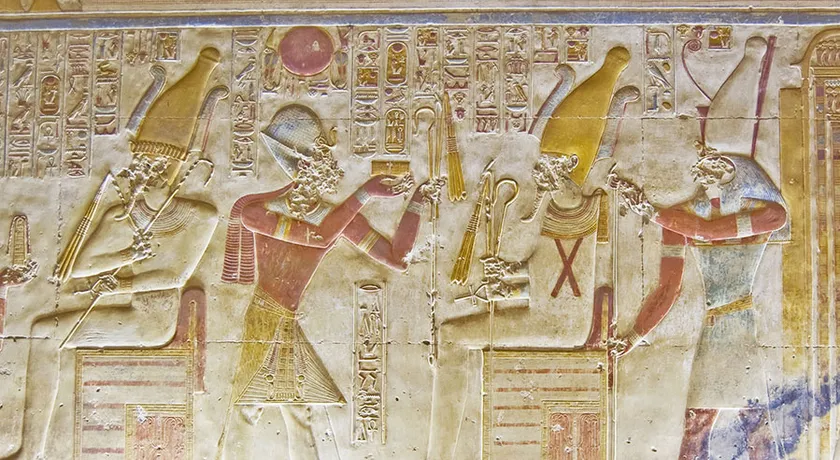
Osiris, the god of the afterlife and resurrection, is another key figure in Egyptian mythology. Osiris’s story is one of tragedy and triumph, as he was murdered by his jealous brother Set, dismembered, and then resurrected by his wife, Isis. Osiris became the ruler of the underworld, judging the souls of the dead and offering them eternal life if they were deemed worthy. This myth emphasized the importance of moral conduct and the hope for life after death.
Isis: The Goddess of Magic and Motherhood
Isis, the wife of Osiris and mother of Horus, was revered as a powerful goddess of magic, healing, and motherhood. Often depicted with a throne-shaped crown, Isis used her magical abilities to protect her family and revive Osiris. Her devotion and love made her one of the most beloved deities in the Egyptian pantheon. Isis’s worship extended beyond Egypt, influencing other cultures in the ancient Mediterranean world.
Horus: The Falcon-Headed Avenger
Horus, the son of Isis and Osiris, was the god of the sky and kingship. With the head of a falcon, Horus was often shown wearing the double crown of Upper and Lower Egypt. After avenging his father’s death by defeating Set, Horus became the symbol of divine kingship and protector of the pharaohs. The “Eye of Horus,” a symbol of protection and royal power, remains one of the most recognizable icons from ancient Egypt.
Egyptian Mythology Facts
Creation Myths and the Origin of the World
The Ennead of Heliopolis
One of the prominent creation myths in Egyptian mythology centers around the Ennead of Heliopolis, a group of nine gods who played key roles in the creation of the world. Atum, the self-created god, emerged from the chaotic waters of Nun and gave birth to Shu (air) and Tefnut (moisture). Their children, Geb (earth) and Nut (sky), produced Osiris, Isis, Set, and Nephthys. This myth explains the origins of the gods and the natural elements, establishing the divine order of the cosmos.
The Ogdoad of Hermopolis
Another creation myth involves the Ogdoad of Hermopolis, a group of eight deities representing primordial elements. These deities, grouped in male-female pairs, personified aspects of chaos and creation, such as darkness (Kuk and Kauket) and water (Nun and Naunet). Their interaction led to the birth of a cosmic egg or lotus flower, from which the sun god Ra emerged, bringing light and order to the universe.
Symbolism and Sacred Animals
The Sacred Apis Bull
In Egyptian mythology, animals were often seen as manifestations of the gods. The Apis bull, for instance, was considered the earthly incarnation of the god Ptah and later associated with Osiris. The bull was worshipped in elaborate rituals and honored with grand burial ceremonies. The Apis bull symbolized fertility, strength, and divine kingship, reflecting the close relationship between humans and the divine in Egyptian belief.
The Revered Scarab Beetle
The scarab beetle, associated with the god Khepri, symbolized the cycle of life, death, and rebirth. Khepri, depicted as a man with a scarab head, was believed to roll the sun across the sky each day, much like a dung beetle rolls its ball of dung. Scarab amulets were popular in ancient Egypt, offering protection and good fortune to the living and the deceased alike.
The Role of Magic and Rituals
The Book of the Dead
Magic and rituals were integral to Egyptian mythology and religious practice. The “Book of the Dead,” a collection of spells and incantations, was designed to guide the deceased through the challenges of the afterlife. These texts were often inscribed on tomb walls or written on papyrus scrolls, ensuring that the soul could navigate the underworld, face judgment, and achieve eternal life.
The Power of Amulets
Amulets played a significant role in Egyptian religious life, providing protection, health, and prosperity. Each amulet had specific properties and was associated with particular gods or concepts. For example, the ankh symbolized life, the djed pillar represented stability, and the Eye of Horus offered protection. These amulets were worn by the living and placed with the dead to safeguard their journey in the afterlife.
Egyptian Mythology Facts
Conclusion
Egyptian mythology is a rich tapestry of gods, myths, and symbols that reveal the spiritual and cultural essence of ancient Egypt. From the powerful sun god Ra to the magical Isis and the avenging Horus, these deities and their stories have left an indelible mark on human history. The creation myths, sacred animals, and magical rituals highlight the deep connection between the divine and the natural world, offering timeless lessons and insights into the ancient Egyptian way of life. Exploring these Egyptian mythology facts not only enriches our understanding of this ancient civilization but also connects us to the enduring legacy of its timeless treasures.